


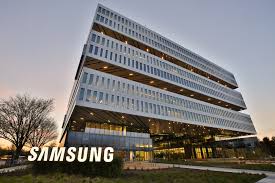
Samsung Electronics’ acquisition of Xealth, finalised in late 2025, is not the kind of healthcare deal that generates front-page attention. There were no billion-dollar figures, no flashy product launches, and no promises to revolutionise medicine overnight. But for anyone tracking how digital health tools actually reach clinicians and patients at scale, it may be one of the more consequential moves in the space.
Xealth built something deceptively simple: a platform that lets physicians prescribe digital health tools directly from the electronic health record. Not as a workaround, not through a separate portal, and not by asking patients to download an app on their own — but as a native part of the clinical charting workflow, with decision support that matches patients to relevant digital interventions automatically.
That distinction matters more than it might appear.
The Prescribing Problem in Digital Health
The healthcare industry has no shortage of digital health applications. Remote patient monitoring, digital therapeutics, clinical nutrition platforms, virtual care tools, patient education content — the supply side of the market is well developed and growing. The bottleneck is not technology. It is clinical adoption.
Most digital health tools exist outside the clinical workflow. A physician who wants to recommend a remote monitoring programme or a digital assessment to a patient typically has to leave the EHR, navigate to a separate system, manually enrol the patient, and hope the patient follows through on their end. In a clinical environment where appointment slots are measured in minutes, that friction is enough to prevent adoption for all but the most motivated providers.
Xealth addressed this by building a SMART on FHIR application that sits inside the EHR itself. Physicians can order digital health tools the same way they order a lab test or a medication — from within their normal charting workflow. The platform handles delivery, patient enrolment, and monitoring, and feeds outcomes data back into the clinical record.
The practical effect is that digital health tools become part of the care plan rather than an afterthought. For health systems trying to scale digital programmes across thousands of patients, the difference between “available if you go looking for it” and “integrated into every relevant clinical encounter” is the difference between a pilot project and an operational capability.
Why Samsung Is Interested
Samsung’s interest in Xealth makes sense when viewed alongside the company’s broader healthcare strategy. Samsung already manufactures medical imaging hardware — digital X-ray systems, ultrasound devices — and has integrated AI diagnostic capabilities from partners like Lunit and VUNO into its premium imaging lines.
But hardware and imaging AI address only part of the clinical picture. The larger opportunity is in connecting what happens inside the hospital — diagnostics, treatment decisions, care planning — with what happens outside it. Remote monitoring, home health management, patient education, and ongoing digital engagement between appointments are where the next wave of healthcare value is being created.
Xealth provides the integration layer that makes that connection possible. By sitting inside the EHR and enabling physicians to prescribe and monitor digital health tools as part of standard care, the platform creates a channel through which Samsung can potentially connect its consumer health devices and monitoring capabilities back to clinical workflows.
The company has been explicit about this ambition, framing the acquisition as a step toward building a bridge between home health monitoring and clinical decision-making — with provider workflows and the patient-provider relationship at the centre rather than the periphery.
What This Means for Health Systems
For hospital IT leaders and digital health programme managers, the Samsung-Xealth combination is worth watching for two reasons.
First, it validates the “formulary” model for digital health — the idea that health systems should manage digital tools the way they manage pharmaceuticals, with a curated catalogue of approved interventions that can be prescribed, tracked, and evaluated within clinical workflows. Xealth has been building this capability with health systems like Froedtert and The Medical College of Wisconsin, where the platform is used to deploy clinical nutrition services to diabetic patient populations at scale.
Second, it raises questions about consolidation in the digital health integration layer. If the platform that connects digital health tools to clinical workflows is owned by a device manufacturer with its own hardware and AI ecosystem, health systems will need to evaluate how that ownership affects neutrality, interoperability, and the ability to integrate competing tools.
The Broader Trajectory
The pattern across healthcare technology is consistent: the most valuable infrastructure is not the individual tools but the integration layers that connect them to clinical workflows. An AI diagnostic algorithm is useful. An AI diagnostic algorithm that is embedded in the imaging device, connected to the EHR, and linked to automated care pathways is transformative.
Samsung appears to be assembling these layers — imaging hardware, AI diagnostics, clinical workflow integration, and consumer health connectivity — into a more cohesive ecosystem. Whether that ecosystem remains open enough for health systems to use it flexibly, or becomes another walled garden in an already fragmented landscape, will determine how much value it ultimately delivers.
For now, the Xealth acquisition is a signal that the competition in digital health is shifting from building better apps to controlling how those apps reach the people who prescribe them.